
February 25, 2026
Two, new Instagram accounts.
Not a Facebook user, I departed that platform several years ago, and turned instead to Instagram – no regrets. In a matter of months I launched three different accounts; Rick Cline Photography, focused solely on drag boat racing, 2 Wheels Touring, dedicated to my love of motorcycles, and lastly, Rick Cline. The Rick Cline Instagram was earmarked for personal photography, showcasing places, and events I had photographed; non-drag boat or motorcycle material. 2 Wheels Touring was a different story; it started with regular biker-type activity, as time passed my efforts were drawn elsewhere, and I allowed the account to become inactive.
The drag boat page began with a bang, but slowed slightly when it became obvious I had few files of newer material. I have a massive drag boat film archive from the past, to the point I could continue posting there for the rest of my life. That account shifted gears when I resumed full-time drag boat photography in 2021. The influx of new digital material immediately gave fresh life. In the meantime I still had lofty plans for the Rick Cline account. It began as a private Instagram, a few years later that plan crumbled, and I opened the page for everyone. All was going well, the two accounts were easily manageable, for several years they were simply on cruise control.
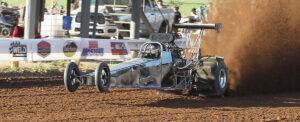
In 2025, I stepped into the thrilling sport of sand drags, at Wellton, Arizona’s, Dome Valley Raceway. With several hundred, fresh sand drags photos to download from my digital camera, I immediately required a place for those exciting images. With no hesitation, I took the easiest route, posting on Rick Cline. Not sure what I was thinking, as it triggered a response I honestly wasn’t prepared for. Watching the trend unfold in real time, I soon realized that account was experiencing a major shift in audience, and serious changes were needed.

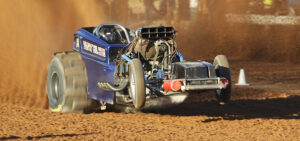
Altering subject matter meant, posting anything but sand drags had to come to a screeching halt. I pondered this process for sometime, knowing what had to be done. My first move was to modify the account name, I had researched that possibility, now it was time to execute. As a result, Rick Cline became a more appropriate Rick Cline Photo. Long-time followers on the Rick Cline account were surely surprised; it’s now 100 percent sand drags.
This brought about a domino-effect, the name change had consequences. With the absence of the Rick Cline account, I was left with no Instagram for other material. I knew what action to take, but this time, I hadn’t yet given much thought to the procedure. A few days of brainstorming gave birth to Rick Cline Magazine. Next step; where was that new account going to land? Instead of building a completely new page, I re-branded 2 Wheels Touring into Rick Cline Magazine. Followers expecting all motorcycles were probably thinking; what’s going on here? Sorry folks, it’s done now. The new Magazine account turns into; Arizona people, places and events.

With that passing storm, I will continue to be busy in photography, posting on a few Instagram accounts, plus keeping this website current. For 2026 I have a pretty good schedule, such as; drag boat racing, sand drags, demolition derby, car shows, blogs (like this one), and several events in Arizona. Thanks for all your support, and following on all three Instagram accounts.
Your comments on my Instagram page are welcomed.
Rick Cline

November 19, 2025
What’s Up Doc.
All photos by Rick Cline
In January 1940, prior to World War II, the United States Army Air Corps issued a request to five aircraft manufacturers to submit designs for a four-engine bomber with a range of 2,000 miles. Ultimately Boeing received the go-ahead order in August, for two flying prototypes, which were given the designation XB-29, and the now-famous B-29 Superfortress was born. The B-29 was capable of flight at altitudes to 31,850 feet, with speeds to 350 mph, covering a range of 5,000 miles. Cost of the B-29 was a staggering $3 billion, exceeding the $1.9 billion cost of the atomic bomb, known as the “Manhattan Project,” making the B-29, the single most expensive undertaking of the war. One of the largest aircraft of World War II, the Superfortress was state-of-the-art; featuring a pressurized cabin, dual-wheeled tricycle landing gear, and an analog computer-controlled fire-control system. First flown in 1942, the bomber did not see combat until 1944. The B-29 was the only aircraft to drop nuclear weapons in combat, striking Hiroshima, and Nagasaki (Japan) in August of 1945. Between 1943 and 1946, Boeing produced 3,970 B-29s, approximately 450 were lost in the war. Today just 26 planes still exist, 24 are located in the United States, with only 2 in flyable condition. The two, surviving airworthy aircraft are; “FiFi”, owned by the Commemorative Air Force, of Dallas, Texas, and “Doc”, owned by Doc’s Friends, of Wichita, Kansas. Both tour the United States offering rides in their historic bombers.

Above photo: An unobstructed photo of Doc, captured from behind the fence.
Doc was built by Boeing, at Wichita, Kansas, in 1944, then delivered to the United States Air Force in March of 1945, and did not see combat. In the early 1950’s while based at Griffiss Air Force Base, New York, the squadron’s members named their B-29s after characters in the Disney movie “Snow White and the Seven Dwarfs” and thus the bomber became “Doc.” In 1955, Doc was moved to Yuma County Airport in Arizona, to be used as a target tug. Retired from the Air Force in 1956, Doc was sent to the Naval Air Weapons Station China Lake for use as a ballistic missile target.
Preparations to return Doc to flight began in 1987 under the direction of Tony Mazzolini, a retired Air Force veteran. The vintage four-engine bomber was then towed to nearby Inyokern Airport, where it was dismantled for transport to Wichita, Kansas, for complete restoration. In February 2013, the aircraft was acquired by the newly formed non-profit organization “Doc’s Friends, Inc.” The bomber received a certificate of airworthiness from the Federal Aviation Administration (FAA) on May 20, 2016, allowing it to be flown. On July 17, 2016, Doc flew for the first time since 1956.


A long-time fan of historic military aircraft, I once took a paid flight in a B-25 Mitchell, a twin-engine World War II bomber. During my career in photography, I’ve had the pleasure of photographing nearly every kind of plane used in World War II, even a couple of B-29s. But never had the opportunity to see, and photograph one in flight. Reviewing the 2025 scheduled tours of FiFi and Doc, I was happy to find Doc would be in Goodyear, Arizona, not too far from home. Early one morning I set out to intercept the B-29 at the Goodyear Airport.

Above photo: The disappointing view of the B-29 from behind the fence.
Upon arrival I was excited to discover the beautifully restored aircraft quietly parked on the tarmac behind a tall chain-link fence. Impressed by the polished finish of four-engine aircraft, I momentarily disregarded the issue of the obstructed view, then realized I needed to get around that fence to snap the photos. Confident in my endeavor, I simply found the nearby hosting aircraft company for the B-29 flights, and walked into their facility to get formal permission to photograph Doc on the ground. One of the gentlemen in charge informed me, I might be able to shoot the parked bomber from their unoccupied patio area, he went on to explain, that decision was ultimately up to his superior. Upon asking his manager a few moments later, I was sternly told “no”, followed by “that’s a hard no.” Making one last effort, I requested the same from a Doc event leader, and received I somewhat kinder “no.” They advised me I was welcome to photograph the plane through the fence, unacceptable for my needs, but I didn’t respond or argue. Instead, I simply thanked him, and walked out the door. Always ready for a challenge, I had to figure out another method. Unfamiliar with the Goodyear airport, and not looking for trouble, it was clear to me, later that afternoon Doc was scheduled to take off, and land, and I would find my opportunity. The Doc people controlled the land facility, but they did not control the sky. Meanwhile, photography on the ground and behind a tall fence would likely be a bigger dilemma I needed to resolve. Attached to the fence a sign stated; “Restricted Area. By Federal Air Regulation. Authorized Personnel Only.” I studied and searched for ways to legally get a clear, and unobstructed view of the bomber with my camera. While it wasn’t easy, ultimately I found very few, none truly satisfied my expectations. Next, I had to locate a good, clear area to capture a take-off, and or landing. I had a lens that allowed me to reach-out and snap photographs of the plane in the air, and fortunately, I knew their flight times. With the clock running, I went to work. In time I discovered what I wanted, a nice position, with good light conditions to seize favorable images of Doc in flight. Standing behind yet another tall fence at the north end of the runway, the B-29 eventually loaded her passengers, started the massive four radial engines, and got underway. Once in the air, I waited for the landing, then received a special, unscheduled treat, when the Doc pilot performed a brief, wheels-up, low-level flight right above me. Then circled back, and with wheels-down, another photo-opportunity as the bomber came in for a landing. With the exception of ground photos and possible start-up images, everything worked out nicely.

Above photo: Flying directly overhead, with wheels up.
Your comments on my Instagram page are welcomed.
Rick Cline
November 19, 2025
The Forgotten Purple Heart.
In the mid-1990s I began writing my first book; “Escort Carrier WWII.” The book follows the World War II history of the American escort carrier, USS Petrof Bay (CVE-80), from launching in January 1944, until decommissioning in 1946. The baby-flattop was home for about 1,000 officers, and crewmen, including my late father, Clovis Cline. When I was very young, my dad shared some harrowing stories from his time on board the carrier. As an adult, I felt compelled to write this book to honor, and share the true story of these brave officers, pilots, and crew. I would later come to realize, one unfavorable outcome from any number of several alarmingly close calls, and Petrof Bay along with my dad, would have been lost, resulting in me never being born. Sadly, not every man from the ship returned home, but I believe all contributed in one way or another, to safely bring this carrier back in one piece.

As I started this long 2-year project, it required a major amount of research, and of course many interviews with the men who served on the carrier. While I traveled around the country to numerous Petrof Bay ship reunions, I purchased the ships’ log book, and action reports from the National Archives. Facts, and hard data was found in the above declassified Navy documents, which I supplemented with other material, and first-hand information from surviving crew-members. Little did I know, this unique adventure would ultimately reveal some previously untold World War II naval history, found within the pages of the 50-year old navy logs. In this blog, I have re-visited one dramatic incident that profoundly changed the life of one man, and his family. During this process I have carried-out further investigation, updated, and re-packaged the true facts for more in-depth details. Therefore, you will find here, more information on this subject than what is printed in the book.

Above: Purple Heart Medal.
This factual drama unfolded on October 27, 1944, when Petrof Bay was returning as a survivor, from the Battle of Leyte Gulf, the largest naval battle of all time. From October 23 to 26, the Japanese lost a staggering 26 warships, including 3 battleships, 4 aircraft carriers, 300 aircraft, and 12,500 men. The American’s lost 7 ships, including 1 light aircraft carrier, 2 escort carriers, (like Petrof Bay) 2 destroyers, 1 destroyer escort, 1 submarine, and 1 PT boat; 3,000 American’s perished in the bloody sea battle.

Above: Japanese kamikaze plane is shot-down by Petrof Bay gunners at Leyte Gulf.
That day in 1944, Petrof Bay had several fighters in the air, to cover and protect the task group from enemy air attacks. While these planes did encounter a few Japanese, the skilled American pilots managed to destroy the threats. The second fighter to return to the Petrof Bay flight deck, routinely had the arresting gear down, ready to catch steel cable stretched over the wooden deck, designed to stop the aircraft. For unknown reasons, the tail hook on this plane missed the cable, allowing the speeding fighter to crash through all of the flight deck safety barriers, finally skidding to a stop in the extreme corner of the deck. During the disastrous landing, the pilot was violently thrown clear of his plane, and surprisingly uninjured. One unoccupied fighter parked on the aft end of the flight deck, was hurled into the sea, and never seen again. Two other aircraft were seriously damaged. Tragically, two flight deck crewmen were mercilessly tossed overboard, and three more sustained injuries. One of the men thrown into the ocean was 18-year old seaman first class, James E. Dreiling. The destroyer USS Taylor operating nearby, quickly responded to the Petrof Bay emergency, and rescued Dreiling. Pulled from the turbulent sea, Dreiling was found to be suffering from a broken left femur, the longest and thickest bone in the body, located between the hip and the knee. The other man overboard was Harry Talbot, seaman first class. Before the destroyer could reach Talbot, he was last seen sinking beneath the waves, and sadly never recovered; it was a heartbreaking loss. The following day, Dreiling was brought back on board Petrof Bay, but the ships’ doctor was unable to further aid the injured man, therefore he was promptly transferred to another vessel, bound for the nearest land-based naval hospital.

Above: FM-2 Wildcat fighter planes on the busy Petrof Bay flight deck.
Sometime during Dreiling’s recovery process, he was mistakenly informed he was not eligible to receive the Purple Heart, because the accident did not occur during combat. That inaccurate information abruptly ended James Dreiling’s World War II story—or so he thought. 54-years later, his daughter Cecilia Baugher found, and purchased a copy of my new book, Escort Carrier WWII, and began reading. Baugher said; “To my surprise my dad is mentioned in the book [and] the book told of his experience.” When she read the other crewman was reported ‘killed in the line of duty’ Baugher said; “It really sparked us to seek this [Purple Heart] further. Continuing, Baugher wrote; “We got together and decided to see if dad qualified for the honor of the Purple Heart. I sent copies of the title page of the book and the pages with the incident on them to our Senator’s office to see if he could help. I had everything that was needed including medical records stating he had been injured in the line of duty. In two-days I received a letter back requesting all the records I could come up with on dad. I received word [Veterans Day—November 11, 1999] from our Senator’s office that they have received the Purple Heart and Senator Sam Brownback will present it to him in Pittsburg, Kansas.” On Tuesday, November 23, 1999, in front of national television, and print media, Senator Brownback presented 73-year old World War II Navy veteran James E. Dreiling his long-overdue Purple Heart medal, “On behalf of a grateful Nation.” During the distinguished presentation, he received a well-deserved standing ovation.
James Dreiling passed away April 4, 2013, it was his 87th birthday. I am deeply honored to have been the instrument God used to right this wrong, and finally deliver the Purple Heart to the late James E. Dreiling. Thank You for your service, RIP.
Born in 1956, Samuel “Sam” Dale Brownback served as a United States senator from Kansas from 1996 to 2011, and as the 46th governor of Kansas from 2011 to 2018.

Above: USS Petrof Bay returns home in 1945.

Your comments on my Instagram page are welcomed.
Rick Cline
October 30, 2025
On the Beach.
Over the years drag boat speeds have substantially increased. From the earliest days in the sport, the fastest boats had occasional issues with slowing down after a high-speed quarter-mile run. Some venues had far more liquid real-estate for reducing speed than others. To help solve this issue, these boats, at the time known as blown fuel hydro’s, began using parachutes. The parachute, sometimes more than one, was attached to the back of the boat, and was deployed (if needed) immediately upon crossing the finish line. Generally, it was the perfect remedy. Sometimes slower boats unexpectedly struck the beach due to various technical problems, however this was unusual. In drag boat history there are likely more than a hundred untold stories of boats running up on the beach at many lakes around the country. Here are just a few instances where I photographed boats that crashed on to the beach at the end of their run.

Above: The pro gas hydro “Star Wars” accidentally ran up on the beach at Firebird Lake in 1986.
My earliest experience in witnessing this problem appeared at my first race, and was perhaps one of the most interesting. It was 1981 at Lake Ming, Bakersfield, California. Veteran driver Ricky Ray Roberts had executed a perfect performance during Saturday’s qualifying with Newman Black’s blown fuel hydro, “Black’s Express.” Sunday afternoon things didn’t end well. It was during eliminations, the boat was again functioning flawlessly until Roberts crossed the finish line. Attempting to routinely deploy the parachute, much to the surprise of Roberts, he discovered the chute failed to deploy. Although decelerating, it was painfully obvious the hydro would not stop before hitting the beach. Time was running out, Roberts had just two quick options; immediately bail-out of the speeding boat, or ride it out and hope for the best, he chose the latter. Making matters worse, the beach was occupied with fans, and directly ahead of the on-coming nitro boat was a park bench, with someone’s afternoon meal cooking over a stove. Before the speeding hydro left the water, spectators were already scrambling for safety. An instant later, the boat collided with the bench, promptly flipping upside-down on top of the table and destroying it. The Coleman stove was tossed about, spilling its steaming hot contents of chilly and hot dogs onto Roberts’ chest. When rescue personnel arrived moments later, their eyes were immediately drawn to the hot food on his driving suite. Their first reaction was to believe the chilly and hot dogs was from the drivers’ vitals. Conceivably possible, but thankfully none of this was true. Roberts’ injuries were instead, minor in nature. Additionally, even the boat was repairable and would be back on the water at the next race. From that event forward, officials would not allow anyone to occupy the newly designated ‘danger zone’ (beach) at the end of Lake Ming.

Above: “Black’s Express “on the beach, Lake Ming, February, 1981
A few years later in 1985, I was again at Lake Ming, when another blown fuel hydro landed on the beach. The fueler’s were being lined up at the starting line when this feeling came over me; one of these nitro boats was going to end up on the beach at the far end of the lake. Prior to the hydro’s getting underway, I grabbed my camera gear and moved as fast as possible to the dreaded vacant beach in preparations. Sure enough, Tim Morgan’s “Morgan’s Flying Machine” proved me correct, when his big Kurtis hydro struck the beach head-on, and tossed the driver up and out of the boat. Fortunately, Tim was not injured and the boat damage was minimal.

Above: Tim Morgan hits the beach at Lake Ming, October, 1985
Fast forward to March of 1996, again at Lake Ming, when I watched in astonishment as a 120 mph flatbottom hit the beach at full-throttle. Until then I had only witnessed hydro’s running out of space at the end of the lake. Crossing the finish line during qualifying, driver Greg Ewing was surely surprised to discover the throttle was stuck wide-open on his big-block Chevrolet. Rather than ride out the enviable disaster, he wisely opted to bail-out, and leave the boat to its own fate. Luckily, Ewing’s injuries were not serious; it was a different matter for the driverless boat. When his ski flat named “Lackin Traction” hit the beach, it was immediately catapulted into the sky, flying extremely high, for a great distance. The speeding flatbottom easily cleared the beach, then flew over the parking lot, next clearing a tall chain-linked fence at the top of a hill-side, finally violently landing a great distance away, on the far side of the access road that surrounded Lake Ming. Upon crash-landing, the engine was torn from the hull, tumbled a few feet, and a fire erupted. Making matters worse, the dry foliage on the hill-side also began to burn. Fortunately, the flames were extinguished, and the totaled boat was removed. The destruction at the crash site resembled the ruin one might expect to see of a small plane crash. Upon inspection of the wreckage, race officials discovered the kill-switch had been intentionally disabled. The entire accident could have been avoided with a functioning kill-switch, required by race tech rules.


Above: Greg Ewing’s ski flat is destroyed after a spectacular accident at Lake Ming.
In later years, the quarter-mile race track was reduced from 1,320 feet to just 1,000, a good way to make the sport safer, reduce speeds and of course allow more room for slowing the boats.
Your comments on my Instagram page are welcomed.
Rick Cline